
Insights · Close and systems
Why Most Month-End Processes Break Down (And How to Fix Them with Better Systems)
Closing the books at the end of each month is a critical task for any growing service-based business. It’s the moment when financial data transforms into actionable insights, revealing profitability, labor costs, and operational efficiency. However, many businesses struggle with a slow, error-prone month-end close that drains resources and clouds decision-making. Over the years, I have seen firsthand how disciplined, clear, and consistent financial operations can transform this process from a dreaded chore into a strategic advantage.
In this post, I will share practical, operationally sound strategies to improve your month-end process. These insights focus on profitability, labor cost visibility, clean reporting, and scalable systems—key pillars that support sustainable growth and confident decision-making.
Understanding the Importance of Month-End Process Improvement
Month-end close is more than just a routine task. It’s the backbone of financial clarity and operational control. For service-based businesses, where labor costs often represent the largest expense, accurate and timely reporting is essential. Without a structured month-end process, businesses risk:
- Delayed financial insights that hinder timely decisions.
- Inaccurate labor cost allocation that distorts profitability.
- Inconsistent reporting that confuses stakeholders.
- Increased labor hours spent on manual reconciliations and corrections.
Improving your month-end process means establishing a disciplined workflow that ensures accuracy, speed, and transparency. This is not about rushing through tasks but about creating a reliable system that scales as your business grows.
Key Components of Effective Month-End Process Improvement
To build a robust month-end close, focus on these core components:
1\. Standardized Closing Checklist
Create a detailed checklist that outlines every step required to close the month. This checklist should include:
- Reconciling all bank and credit card accounts.
- Verifying revenue recognition against contracts and service delivery.
- Reviewing labor cost allocations by project or department.
- Confirming accruals and prepaid expenses.
- Validating journal entries and adjustments.
A standardized checklist ensures nothing is overlooked and provides a clear roadmap for your team.
2\. Automation and Integration
Manual data entry is a major source of errors and delays. Invest in accounting software that integrates with your payroll, time tracking, and project management systems. Automation can:
- Pull labor hours directly into your accounting system.
- Automatically allocate labor costs based on predefined rules.
- Generate preliminary financial reports for review.
This reduces manual work and improves data accuracy. NOTE: Even with automation tools in place, these issues don’t resolve themselves without proper oversight.
3\. Clear Labor Cost Visibility
Labor is often the largest and most variable cost in service businesses. To manage it effectively:
- Track labor hours daily or weekly, not just monthly.
- Use project codes or departments to allocate labor costs precisely.
- Compare actual labor costs to budgets and forecasts regularly.
This visibility helps identify cost overruns early and supports better pricing and staffing decisions.
4\. Consistent Revenue Recognition
Revenue recognition must align with service delivery and contract terms. Establish clear policies that define when and how revenue is recognized. This avoids revenue spikes or dips that can mislead stakeholders.
5\. Scalable Reporting Systems
As your business grows, your reporting needs become more complex. Design reporting templates that can handle increased data volume without sacrificing clarity. Use dashboards to highlight key metrics like gross margin, labor cost percentage, and net profitability.

Financial reports and laptop on office desk
Practical Steps to Streamline Month-End Close
Implementing improvements requires a step-by-step approach. Here’s a practical roadmap:
Step 1: Map Your Current Process
Document every task, who performs it, and how long it takes. Identify bottlenecks and error-prone steps.
Step 2: Define Roles and Responsibilities
Assign clear ownership for each task. Accountability drives discipline and consistency.
Step 3: Implement Technology Solutions
Choose tools that integrate well with your existing systems. Prioritize automation for repetitive tasks.
Step 4: Train Your Team
Ensure everyone understands the process, tools, and importance of accuracy. Regular training reduces errors.
Step 5: Establish Deadlines and Milestones
Set realistic deadlines for each step and monitor progress daily during close periods.
Step 6: Review and Improve
After each close, hold a debrief to discuss what worked and what didn’t. Use feedback to refine your process.
The Role of Labor Cost Management in Month-End Success
Labor cost visibility is a cornerstone of financial clarity in service businesses. Without it, profitability analysis is guesswork. Here’s how to sharpen your labor cost management:
- Daily Time Tracking: Encourage employees to log hours daily. This reduces errors and provides real-time data.
- Project-Based Allocation: Assign labor costs to specific projects or clients to understand true profitability.
- Variance Analysis: Compare actual labor costs to budgets monthly. Investigate significant variances immediately.
- Use Labor Cost Metrics: Track labor cost as a percentage of revenue and gross margin impact.
By embedding labor cost management into your month-end close, you gain a powerful lever to control expenses and improve margins.
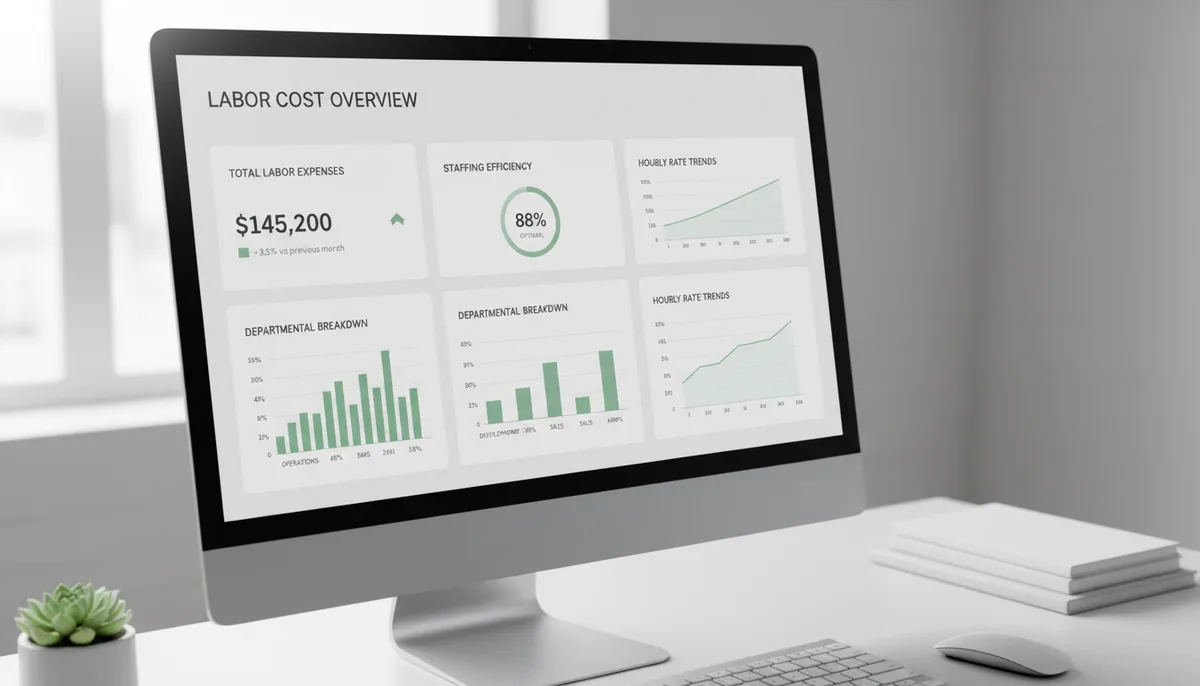
Labor cost analytics dashboard on computer screen
Building Scalable Systems for Sustainable Growth
A month-end close process that works for a small team may buckle under growth pressure. Scalability requires:
- Modular Processes: Break down the close into manageable modules that can be expanded or delegated.
- Cloud-Based Solutions: Use cloud accounting and reporting tools for accessibility and collaboration.
- Standardized Data Inputs: Ensure data is entered consistently across systems to avoid reconciliation headaches.
- Regular Process Audits: Periodically review your close process to identify inefficiencies and update procedures.
Scalable systems allow you to maintain financial discipline without increasing labor costs disproportionately.
Final Thoughts on Month-End Process Improvement
Improving your month-end close is not a one-time project but an ongoing commitment to clarity, discipline, and consistency. By focusing on structured workflows, labor cost visibility, and scalable systems, you create a financial foundation that supports confident decision-making and sustainable growth.
If you want to streamline month end close process effectively, start by mapping your current operations and building from there. The benefits are clear: faster closes, cleaner reports, and a sharper view of your business’s profitability.
Continue Reading:
##### \#FiscalFusion \#ServiceBasedBusiness \#MonthEndClose \#LaborCostManagement \#DFWBusiness
Tags:
Recent Posts
Why Clean Books Aren’t Enough: The Gap Between Reporting and Real Financial Clarity
Why Clean Books Aren’t Enough: The Gap Between Reporting and Real Financial Clarity
What Strong Financial Systems Actually Look Like in a Service Business
What Strong Financial Systems Actually Look Like in a Service Business
Why Bookkeeping Will Never Be Fully Automated (And What Actually Should Be)
Why Bookkeeping Will Never Be Fully Automated (And What Actually Should Be)

Menu
Contact
Address
Operating in Dallas-Fort Worth
Socials